
For the first three weeks of filming, everyone on the set of "The Crown Unbroken" found it charming. Endearing, even. Here was one of Britain's most respected actors, a BAFTA winner and two-time Olivier Award recipient, so fully committed to portraying a young King George V that he insisted on being addressed exclusively as "Your Majesty" — not just during takes, but during lunch breaks, between setups, and even in production meetings. By week six, the charm had worn off entirely. By week ten, three cast members had walked off set, the director had threatened to quit, and the production was facing a crisis that threatened to derail one of the most anticipated British films of the decade.
Webloids has obtained extensive accounts from eight members of the production team — actors, crew, and support staff — who paint a picture of a film set that descended from artistic ambition into something approaching genuine absurdity. What follows is the definitive account of how one actor's dedication to his craft transformed the production of a $90 million historical epic into one of the most bizarre chapters in British film history.
The Descent into Character
The warning signs appeared during pre-production. While the rest of the cast arrived at Pinewood Studios for a two-week rehearsal period in their normal attire, the actor — whom we shall refer to as "James" throughout this article to respect ongoing studio confidentiality agreements — showed up on Day One wearing a full Edwardian morning suit, complete with pocket watch, tie pin, and shoes custom-made by a Jermyn Street cobbler using techniques from the early 1900s.
"We all thought it was a lovely bit of character work," recalls the actress cast as Queen Mary. "Method acting is common enough in our profession. Daniel Day-Lewis, Jared Leto, Christian Bale — we've all heard the stories. I thought, 'Good for him, he's taking it seriously.' I had no idea what was coming."
"He arrived on the first day of rehearsals and informed us all, without a trace of irony, that he was to be addressed as 'Your Majesty' for the duration of the production. He spoke in the clipped, formal cadences of Edwardian aristocracy. He would not answer to his real name. When the assistant director called him by his actual name to offer him coffee, he simply stared at her as though she had spoken in a foreign language." — A senior crew member who worked on the production
The director, an acclaimed British filmmaker known for his quiet, collaborative approach, initially accommodated the request. "He's a genius," the director reportedly told his producer. "If calling him 'Your Majesty' gets us the performance of a lifetime, it's a small price to pay." What the director didn't anticipate was how quickly the "small price" would escalate into an all-consuming production nightmare.
The Royal Demands Escalate
By the third week of filming, the actor's method approach had expanded far beyond a preferred form of address. He began arriving on set in a Rolls-Royce (rented from a specialist vehicle company at his own expense) and insisted that a red carpet be laid from his trailer to the set each morning. He employed a personal valet — actually his long-suffering personal assistant, dressed in period-appropriate livery — who would announce his arrival to the set with a formal: "His Majesty has arrived and is prepared to work."
He refused to eat the standard catering ("The King does not consume commoners' food"), requiring special meals prepared by a private chef who was flown in from a gentleman's club in Mayfair. He would not speak directly to crew members below the rank of department head, instead communicating through his "valet" with instructions delivered in the third person: "His Majesty believes the lighting in this scene should be warmer."
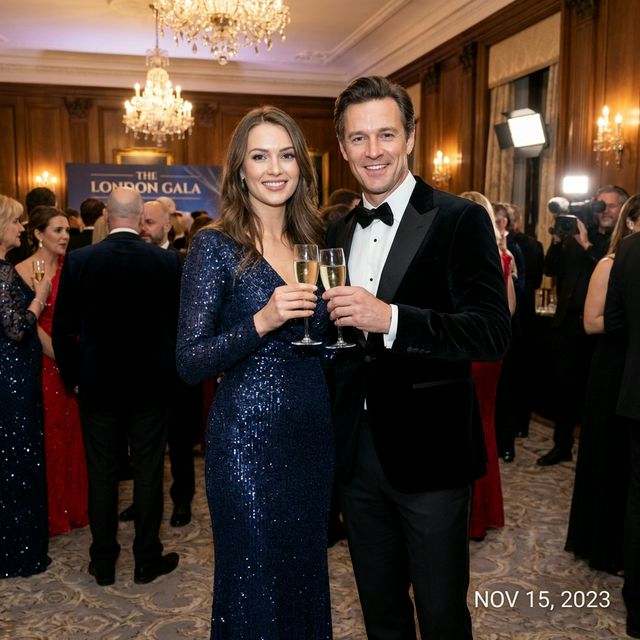
"At first, the crew found it hilarious," says a camera operator who worked on the production. "There were bets in the crew room about how long he'd keep it up. Some people thought it was performance art — like he was testing everyone to see if they'd push back. But as the weeks went on and the behaviour intensified, the laughter stopped. People started getting genuinely uncomfortable."
The Breaking Point
The crisis reached its peak during the filming of a critical scene in week ten — a pivotal moment depicting the King's confrontation with his prime minister during the Parliament Act of 1911. The scene required intense, closely choreographed dialogue between the actor and the veteran character actor playing the PM, a beloved figure in British cinema known for his warmth and collaborative spirit.
According to multiple accounts, the actor refused to rehearse the scene with his co-star because "the King does not rehearse conversations with his subjects." When the director attempted to block the scene — the standard practice of working out movements and camera positions — the actor dismissed him with a wave of his hand and the words: "The King does not take direction. The King acts, and the camera follows."
The veteran character actor, after a tense silence that witnesses describe as lasting "an eternity," quietly removed his microphone, placed it on a nearby table, and walked off set. Two other cast members followed within the hour. The director retreated to his office and placed a call to the producers that lasted four hours.
"There's a line between commitment and delusion, and he sprinted past it at full speed. We're all professionals. We've all worked with method actors. But this wasn't method acting — this was a man who had forgotten the difference between playing a king and believing he was one." — The veteran character actor, speaking to Webloids
The Intervention
What happened next has been described by those present as "the most British confrontation in film history." The producers, the director, and the film's primary financiers arranged a meeting with the actor at the studio's executive boardroom. The actor arrived, naturally, with his valet and a demand that everyone stand when he entered.
"Nobody stood," recalls one of the producers. "And that was the moment I think reality began to crack through. He looked around the room, saw twelve very serious faces, and for the first time in three months, I saw a flicker of the actual person behind the performance."
The meeting lasted three hours. A compromise was reached: the actor would maintain his method approach during filming and rehearsals but would revert to his "civilian" identity during breaks, production meetings, and any interaction with crew. He would attend a daily decompression session with a performance psychologist brought in specifically for the production. And he would, immediately and without condition, apologize to each cast and crew member who had been affected by his behaviour.
The apologies, sources say, were genuine and deeply emotional. "He broke down," reports one witness. "He said he'd lost himself somewhere inside the character and didn't know how to find his way back. It was the most honest any of us had seen him since the project began."
Was It Worth It?
The production completed filming six weeks behind schedule and approximately £12 million over budget. Studio sources report that the insurance implications alone ran into seven figures. Several crew members have filed formal complaints with the relevant unions. At least one cast member has publicly stated she will never work with the actor again.
And yet, early footage from the production tells its own story. Industry figures who have seen a rough assembly of key scenes describe the actor's performance as "transcendent," "terrifying in its authenticity," and "quite possibly the finest portrayal of a British monarch ever committed to film." The director himself, despite everything, has stated publicly that he believes the performance will be remembered for decades.
"Does great art justify terrible behaviour?" muses the veteran character actor who walked off set. "That's a question every generation of actors has to answer for itself. My answer is no. But I also know, having seen what he did on camera, that his answer is more complicated than mine. And that's what makes this story so very, painfully, quintessentially British."
"The Crown Unbroken" is scheduled for release in November 2026. Awards season buzz has already begun.
💬 Comments (4,785)
"The King does not rehearse conversations with his subjects" 😂😂😂 I'm sorry but this is the funniest thing I've read all year. British cinema is truly unmatched.
This is genuinely unacceptable behavior regardless of the final product. Crew members deserve respect. Method acting is not a license to treat people as lesser beings. Full stop.